TMJ Disorder
TMJ (Temporomandibular Joint) Disorder is part of a broader defined condition referred to as craniofacial pain.
.svg)
.svg)


TMJ (Temporomandibular Joint) Disorder is part of a broader defined condition referred to as craniofacial pain. Craniofacial pain is common and in fact there is high prevalence of signs and symptoms of temporomandibular disorders in people NOT seeking treatment. It is estimated 50-75% of the population has TMJ dysfunction yet only 3-4% end up seeking treatment. Meaning the majority of the population has some sort of TMJ dysfunction just not everyone has symptoms. With that being said women outnumber men 2:1 as far as the incidence of craniomandibular disorders, and they constitute 85-90% of the treatment population. The exact reason for why the majority of TMJ symptoms affect women is unclear but it is thought that it may be due to hormonal differences.
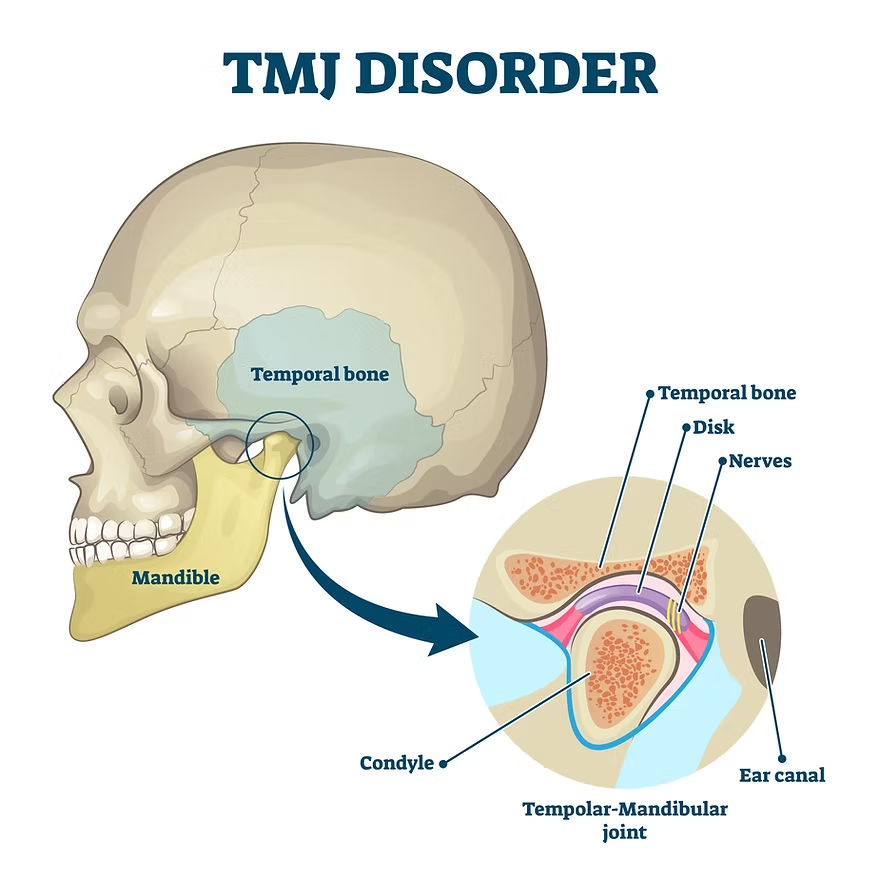
The TMJ is the smallest joint in the body and it is located between the temporal bone of our skull and the condyle of the mandible (our jaw). This is pictured above. In between these two bones is a small disc. When we open our mouth the disc glides smoothly between the two bones allowing us to speak, eat, and open without pain, clicking, popping, or restrictions. In TMJ Disorder this disc loses the ability to glide between the two bones causing pain, clicking, and reduced mouth opening. Many patients will also have muscle imbalances within the jaw muscles themselves leading to grinding.
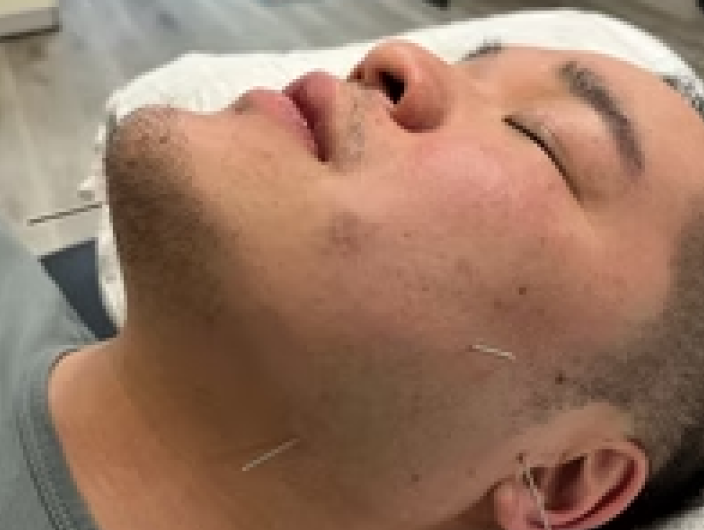
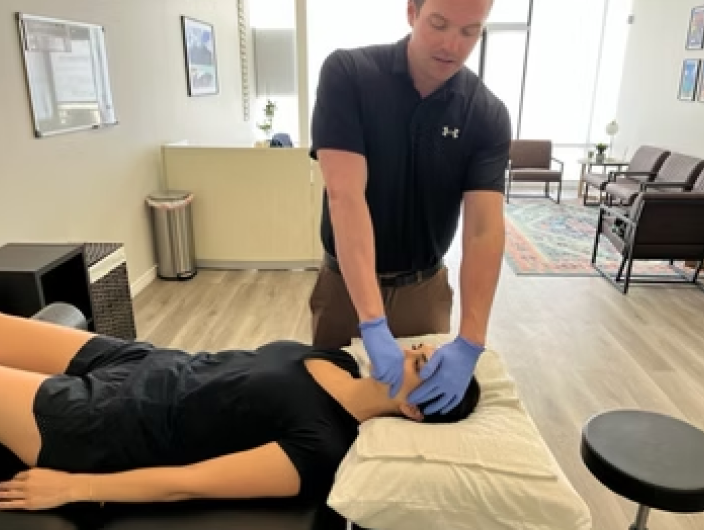
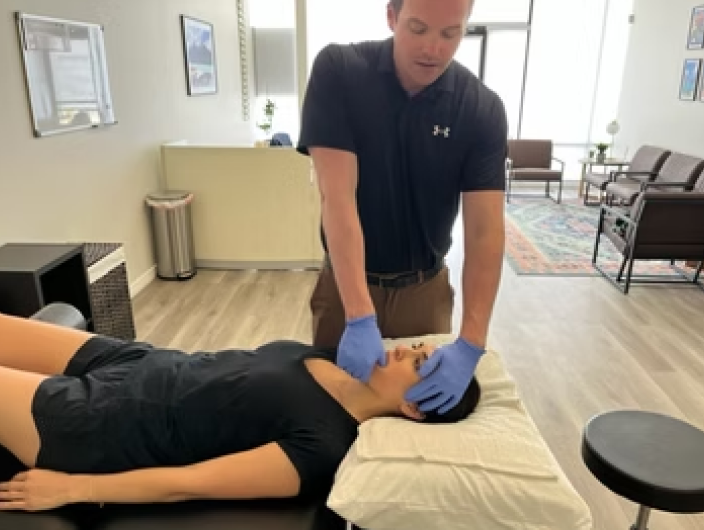
The root cause of all TMJ is actually another postural condition referred to as “Upper Crossed Syndrome”. It’s extremely common and we are seeing more and more of it in physical therapy as people spend more time at the computer and on their phone where they are spending prolonged periods of time in postural compromise where they are looking down at a screen. As humans we have a muscle imbalance in our upper extremity in which the muscles that rotate and pull our shoulders and neck forward (our traps, pecs, SCM, and lats) are a lot bigger and stronger overall than the muscles that reinforce good posture (rotator cuff, rhomboid, mid trap/low trap, cervical deep neck flexors). This causes an imbalance where people tend to have rounded shoulders or be hunched forward when they stand or sit (why most people lean over a table or desk when you look at them in an office setting, restaurant, etc). As this persists for a long period of time people can develop spinal mobility issues and increased muscle tension and tightness within the cervical and thoracic musculature causing pain, headaches, tightness, etc. This postural condition can also affect the TMJ. When someone has poor forward head posture related to the condition above, it affects the position of the TMJ. Forward head position can cause the mandible (the lower part of the TMJ) to draw down and back out of place. When this happens the disc can no longer smoothly glide between the mandible and temporal bones because the mandible is too far back. The hallmark sign of TMJD will be the jaw deflecting towards the side of the impairment when the person opens their mouth because the disc cannot glide between the two bones on that side. This causes pain, clicking, popping, or an inability to open the mouth fully. TMJD is very treatable and tends to have excellent results in physical therapy. In physical therapy we work to treat TMJD by first reducing pain with techniques such as dry needling and soft tissue massage. We then work on restoring the position of the mandible to where it should be through joint mobilizations and exercises so the disc can glide between the two bones as it is supposed do. Finally, we work on reversing the postural condition described above to reinforce good posture to maintain the position of the jaw over long periods of time so the condition does not recur.
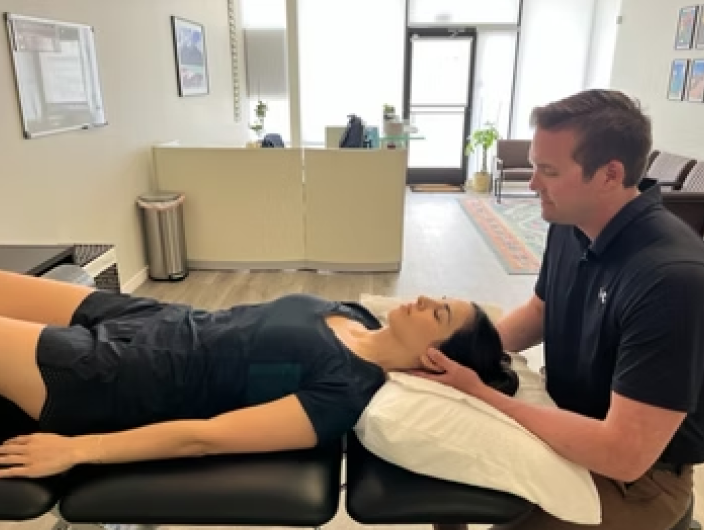
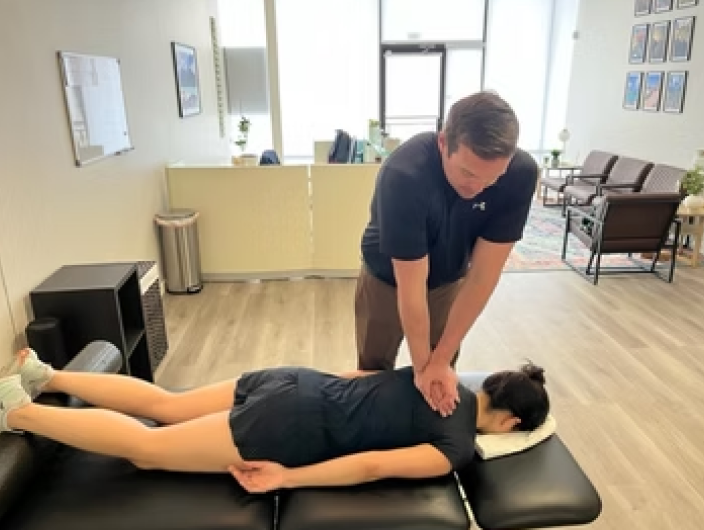
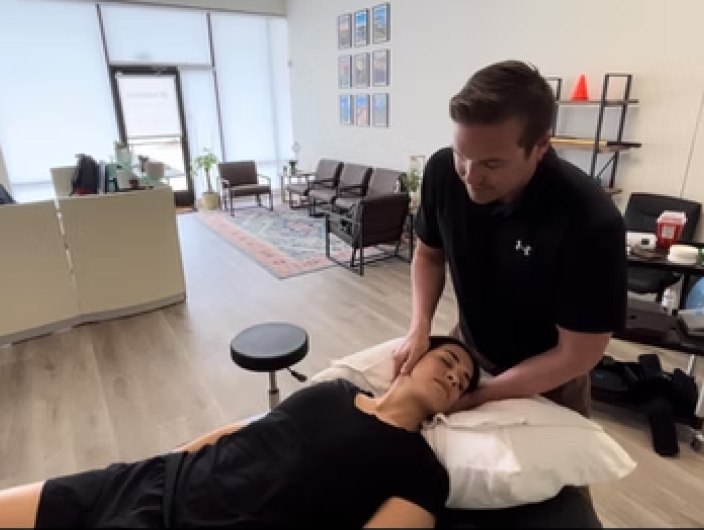
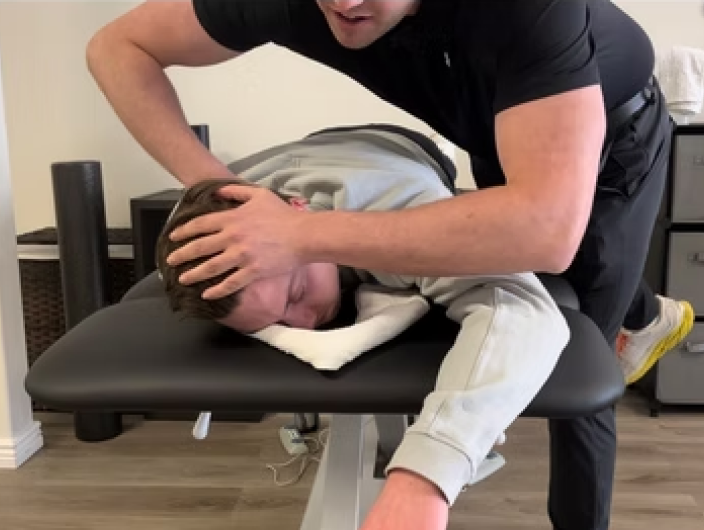
Below are pictures of examples of how we treat TMJD in our physical therapy clinic. If you would like to schedule an appointment please reach out to us.
Posture related pain is often referred to as “Upper Crossed Syndrome”. It is extremely common and we are seeing more and more of it in physical therapy. This is because people are spending more time at the computer and on their phone where they are spending prolonged periods of time in postural compromise looking down at a screen. As humans we naturally have a muscle imbalance in our upper body. The muscles in our upper body that rotate and pull our shoulders and neck forward (our traps, pecs, SCM, and lats) are a lot bigger and stronger overall than the muscles that reinforce good posture (rotator cuff, rhomboids, mid trap/low trap, cervical deep neck flexors). This causes an imbalance where people tend to be rounded or hunched forward when they stand or sit (why most people lean over a table or desk when you look at them in an office setting, restaurant, etc). As this persists for a long period of time people can develop spinal mobility issues, increased muscle tension and tightness within the neck and mid back, and headaches amongst other symptoms. Upper Crossed Syndrome can present itself in different ways depending on the person. One person may have headaches, one may have feelings of neck stiffness, another may have feelings of pain in their upper traps, others may have feelings of stiffness in their mid back. Or people may have a combination of symptoms all related to the same condition. Treatment for upper crossed syndrome tends to get excellent results in physical therapy. Treatment typically involves using hands on therapy to alleviate muscle tightness and stiffness within the spine, and following that with posture related exercises to prevent recurrences of pain. Below are some pictures of techniques we use to treat posture related pain in our clinic. If you would like to schedule an appointment please reach out to us.
Whether you need physical therapy, manual therapy, or advanced treatments, our team is here to help.
Posture related pain is often referred to as “Upper Crossed Syndrome”. It is extremely common and we are seeing more and more of it in physical therapy.
Shoulder impingement is one of the more common causes of shoulder pain. Shoulder impingement occurs when the supraspinatus
ennis Elbow, medically referred to as lateral epicondylitis, is an overuse injury that effects two muscles in the outer elbow called the extensor